
Craters of the Moon is a national park near Arco, Idaho, where the NPS describes eruptions over the last 15,000 to 2,000 years in eight stages that built cinder cones, lava flows, and lava tubes across the Snake River Plain. The field reads as fresh against the surrounding landscape, and the NPS geology page is the source for the stage-by-stage story.
Start at the operator's door: the Robert Limbert Visitor Center at 1266 Craters Loop Road, Arco. The NPS directions page lists that address, and a navigation pin dropped in the middle of the lava field can point at undeveloped areas that are not connected to the visitor center by a convenient road. Use the visitor-center destination when you set a pin.
The loop road is paved and designed for most vehicles, including RVs, but that is a description of its design, not a live winter opening statement. The NPS basic information page says the loop normally closes to most vehicle traffic around mid-November, and the conditions page recorded the road closed to vehicle traffic on November 18, 2026. Treat the day's conditions page as the road authority, and do not let a navigation app promote a remote track into a scenic alternate.
Entry cost depends on the loop. The NPS fees page, checked November 27, 2026, lists a $20 private-vehicle pass for seven consecutive days when an entrance fee applies, and it says no entrance fee is charged whenever the Loop Road is not fully open to automobiles. The fees page also lists a nonresident interagency pass, so confirm the charge that applies on your day at the park rather than reusing a number from a previous season.
The lava tubes are the park's signature feature, but as of November 18, 2026 the conditions page lists Indian Tunnel and Dewdrop Cave closed and the other caves closed for the season. When the caves are open, the NPS cave permitting page says a separate free in-person permit is required, and the America the Beautiful pass is not a cave permit. If the caves are closed on your day, let them stay closed.
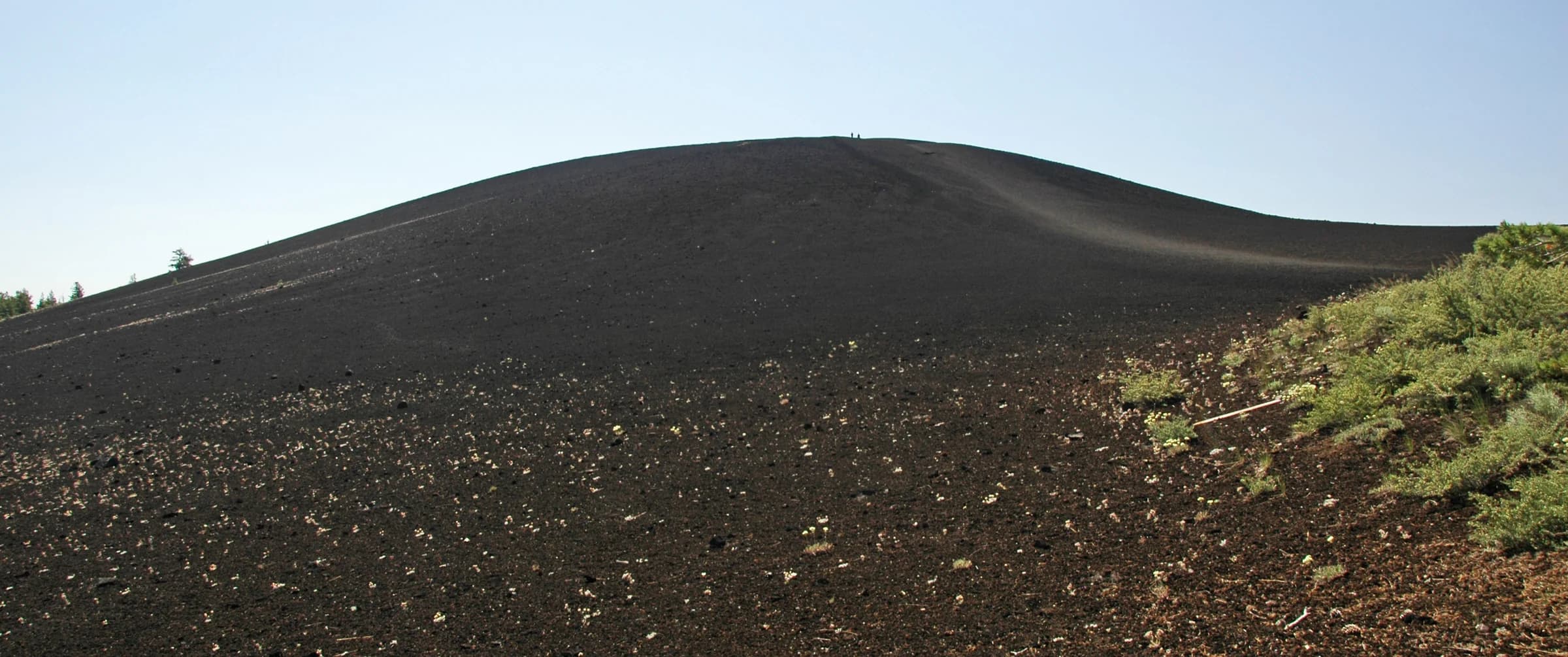
A supporting photograph in the research packet shows cinder and spatter cones seen from Inferno Cone, credited to James St. John under a CC BY 2.0 license, and the published hero keeps that credit and license with a resized-from-original disclosure. The photo is a view, not a route endorsement: it shows no bright flowing lava and it does not prove today's access to the cones. The conditions page also recorded Lava Flow Campground closed to vehicle camping with campground water off, so plan any winter camping from the operator's page, not from a summer brochure.
The Great Rift and the layered eruption history make this field worth understanding even when the version available on a particular day is smaller than a brochure suggests. A sound visit plan is the one that starts at the entrance, checks the live conditions, and picks only the surface stops that are actually reachable.
Research Note: confirm hours and access with the operator before a long drive.
Highlights
Navigate To The Entrance, Not The Middle Of The Map
The Robert Limbert Visitor Center at 1266 Craters Loop Road is the operator's listed destination, not a point in the lava field.
Caves Are A Separate Permit
When open, the tubes require a free in-person permit; as of November 18, 2026 the conditions page lists them closed.
Winter Rules The Loop And The Fee
$20 for a private vehicle when the fee applies; no entrance fee while the Loop Road is not fully open to automobiles.