

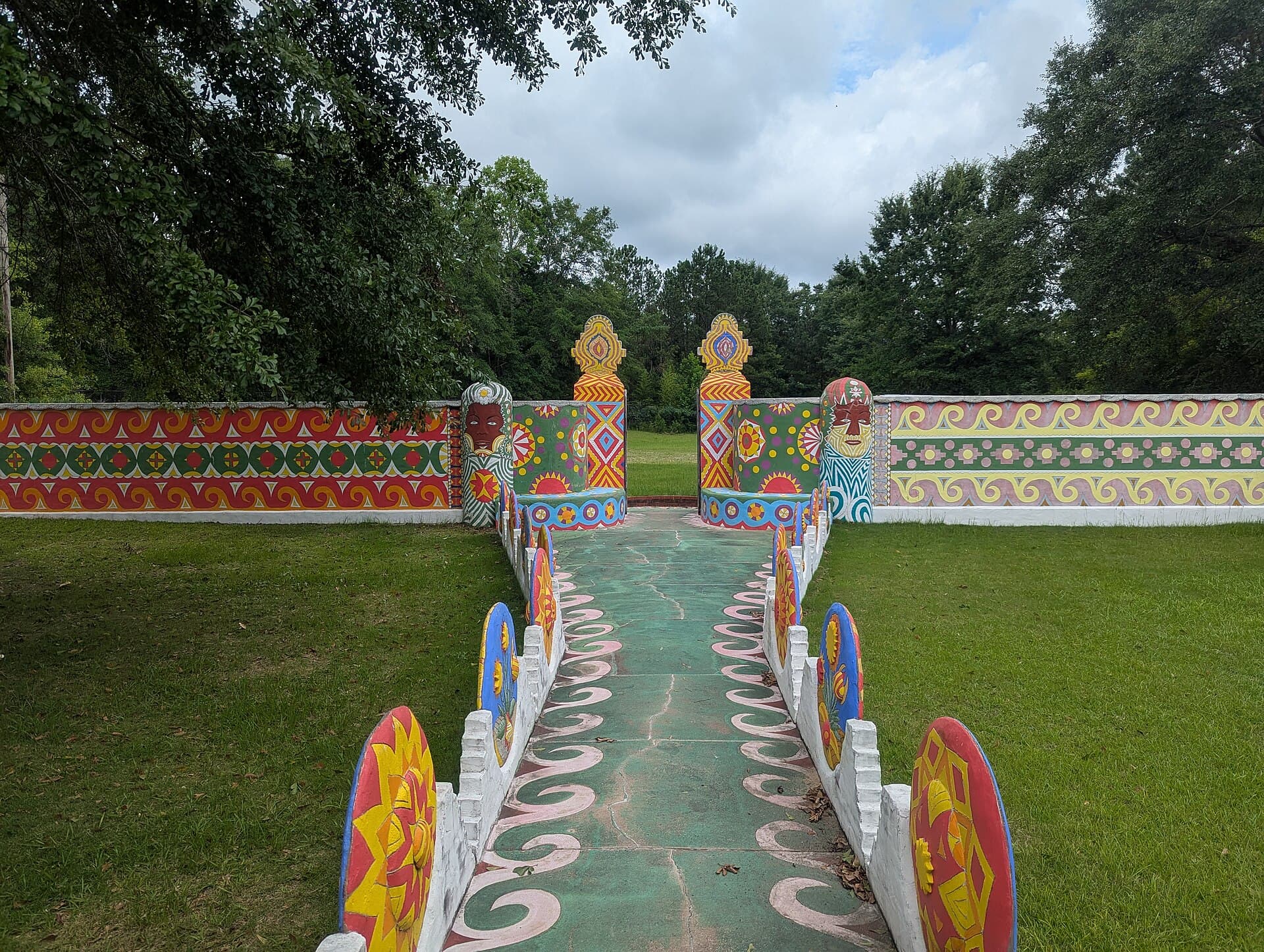
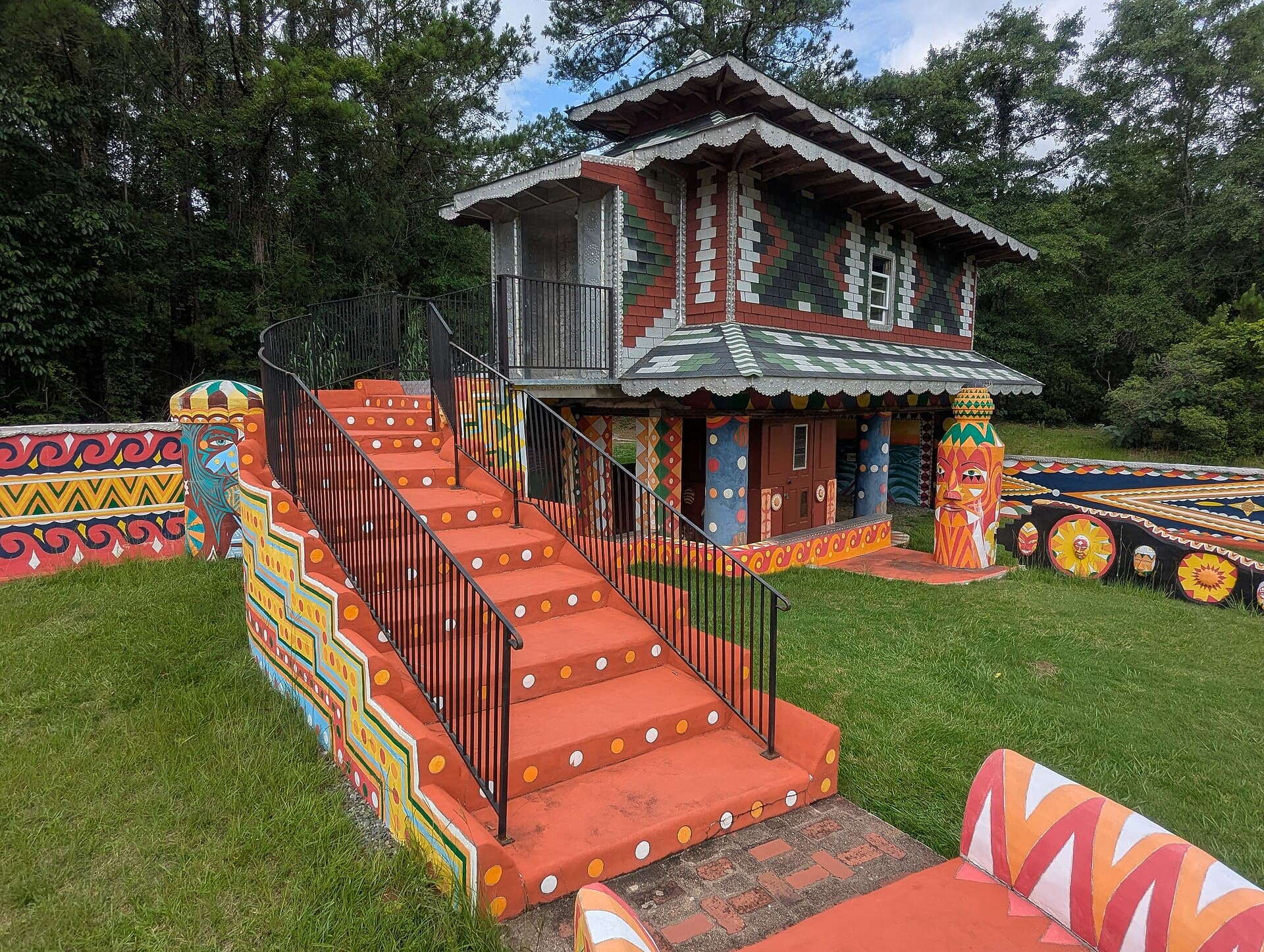
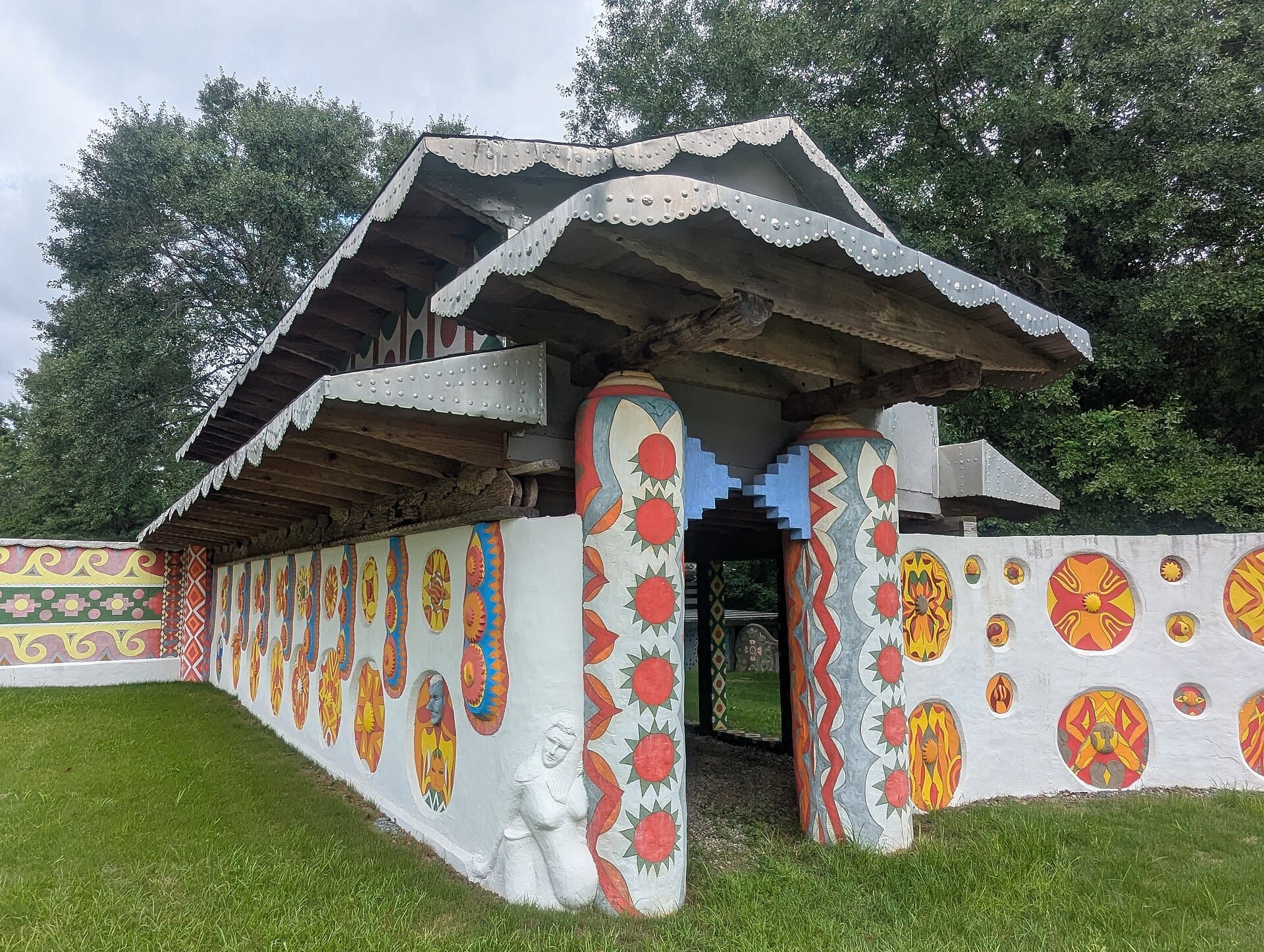
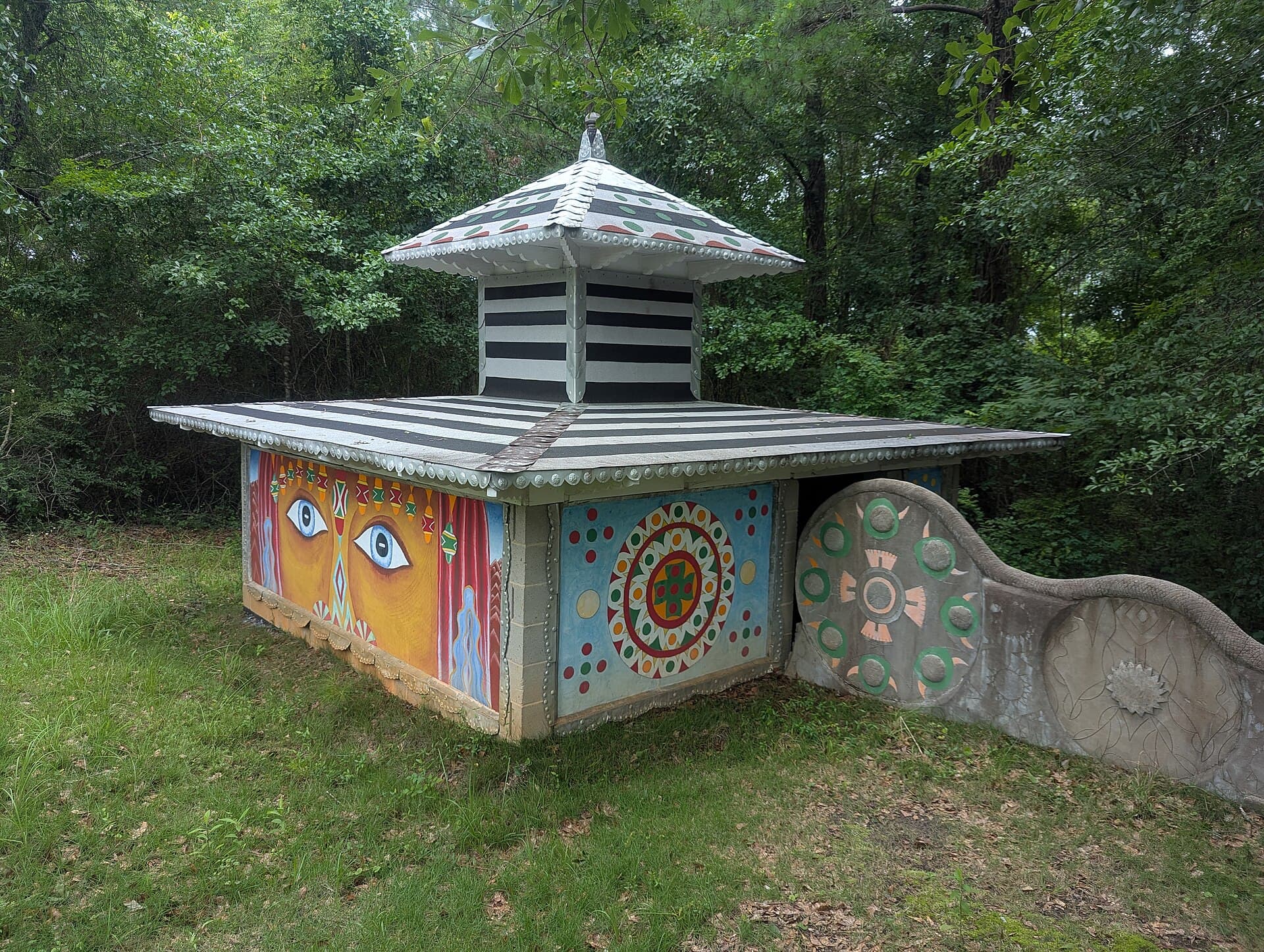
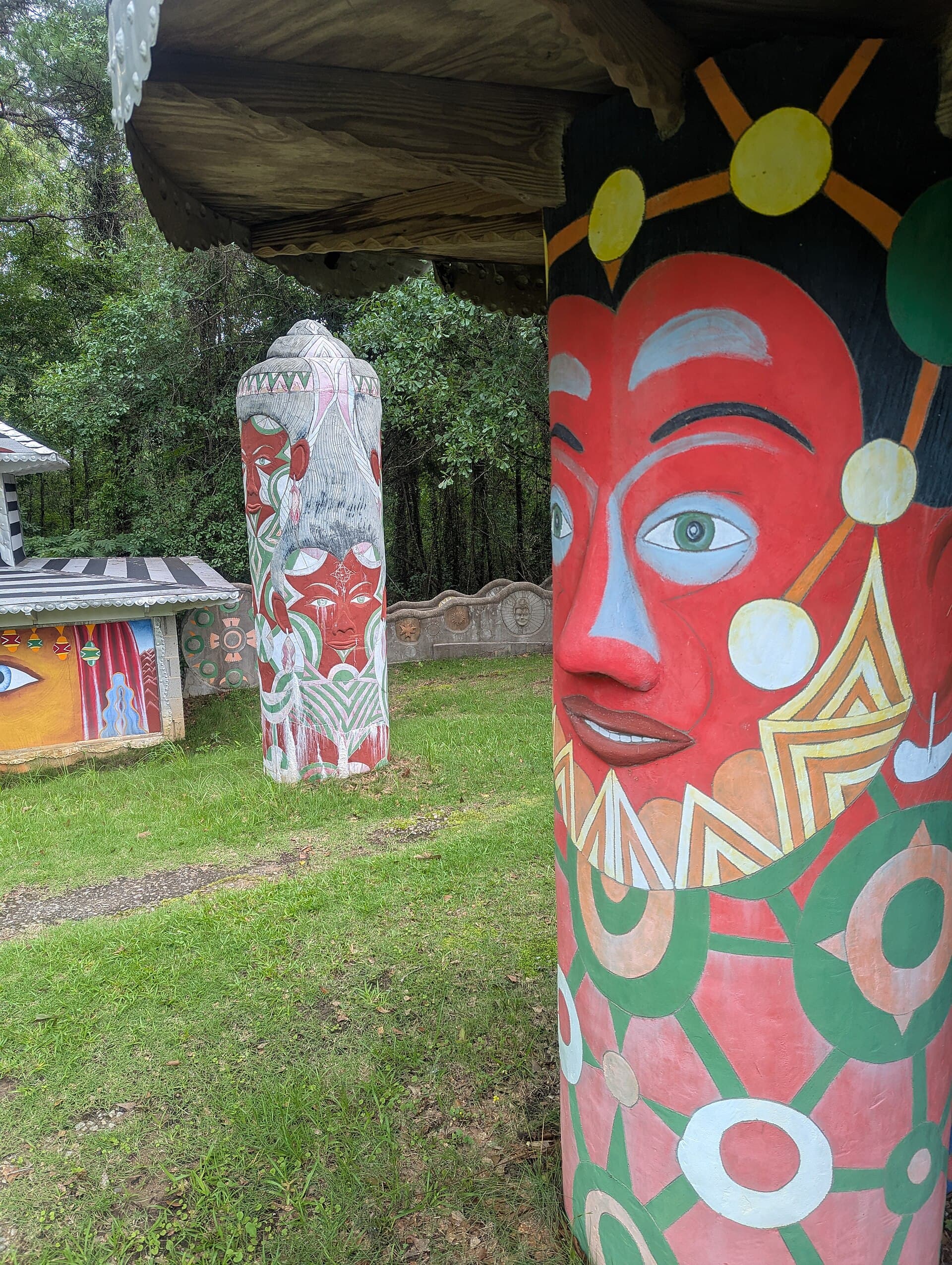
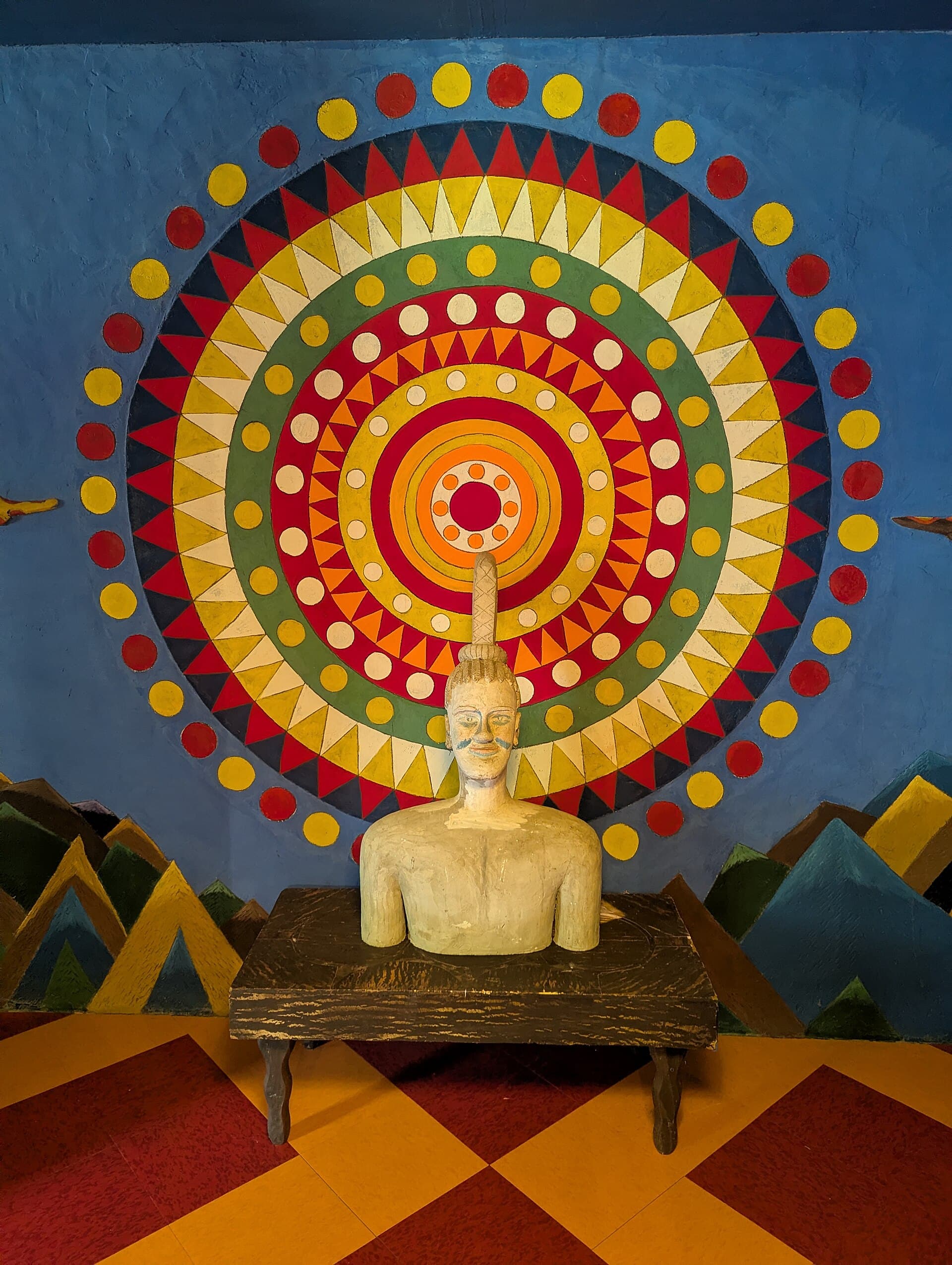
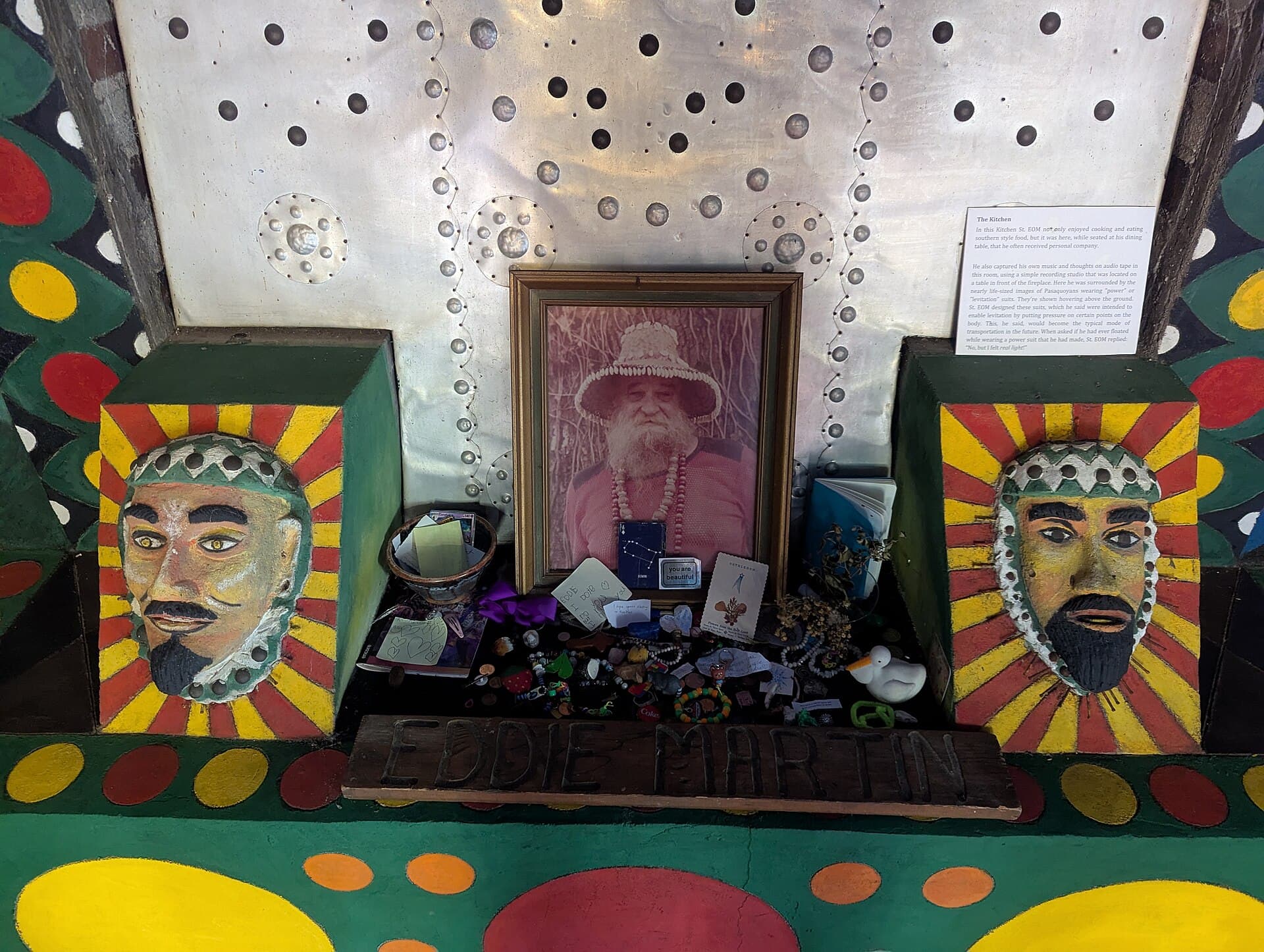
Pasaquan is less a house museum than a complete visual language. Eddie Owens Martin, who called himself St. EOM, spent decades shaping the site into an art environment that few visitors experience fully on a first visit. The useful way to approach Pasaquan is slowly. Give the walls, faces, symbols, and changing sightlines time rather than treating the place as a quick roadside photograph. The environment rewards a patient visitor with details that reveal themselves only after a careful look at the painted surfaces and the relationship between interior and exterior.
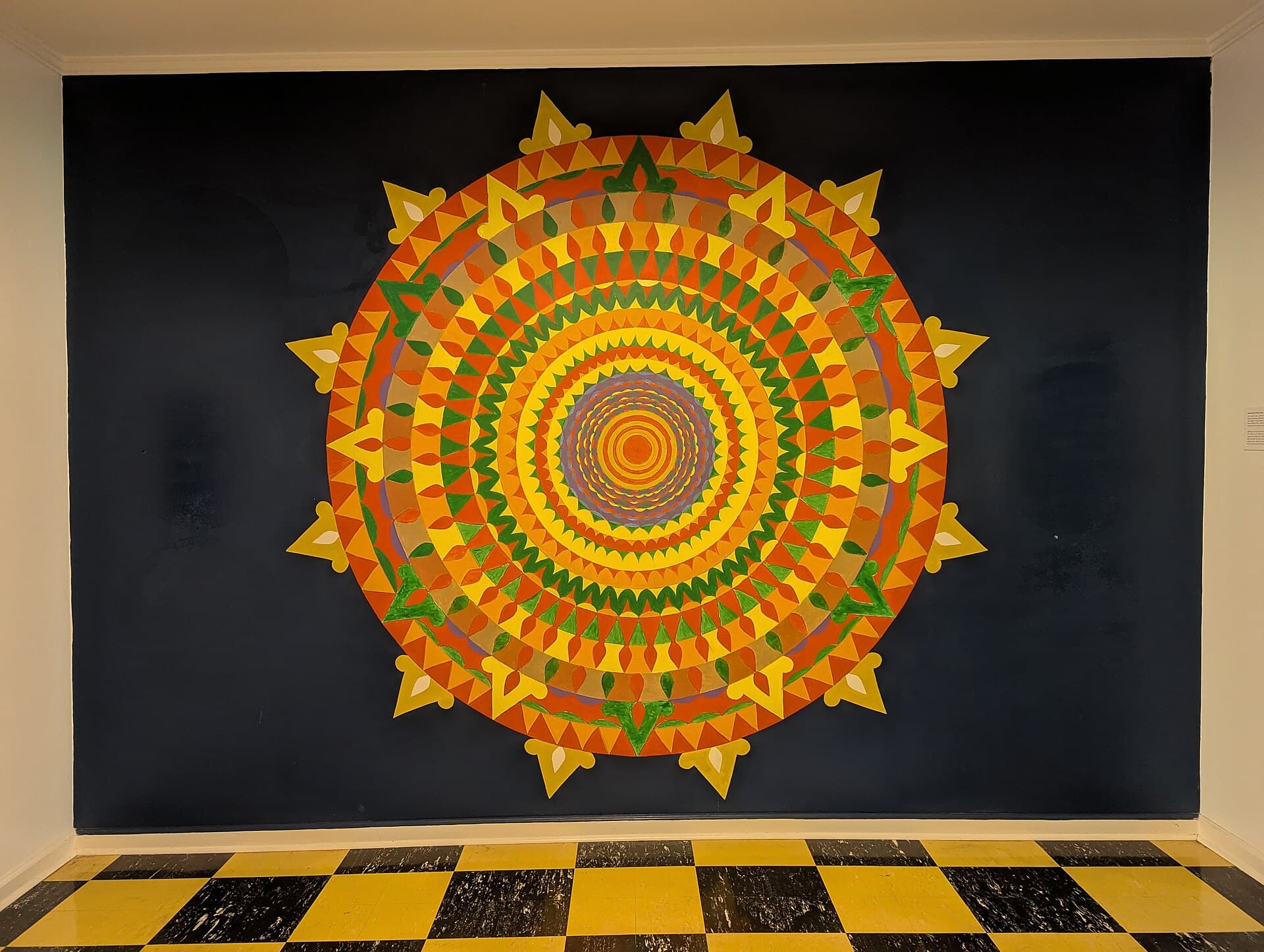
The official Columbus State University page describes a seven-acre environment and publishes the operating calendar with the most reliable information available. St. EOM's wife, Helen, died in 1971, and Martin lived in the house until his own death in 1988. He continued painting, sculpting, and rearranging the environment right up to the end, which gives the place an unusual authenticity. There is no later curatorial layer reshaping the space. What you see is Martin's hand, in layers, across decades. The walls are not a gallery wall with artworks hung upon them. The walls are the artwork, painted from floor to ceiling, inside and out, with Martin's figures rendered in strong proportions and earth tones against white backgrounds or layered in deep blues and reds. The geometric patterns include circles, stripes, crosses, and what Martin himself called the living line. These are not decorative add-ons; they form a coherent visual system that holds together across the full seven-acre site.
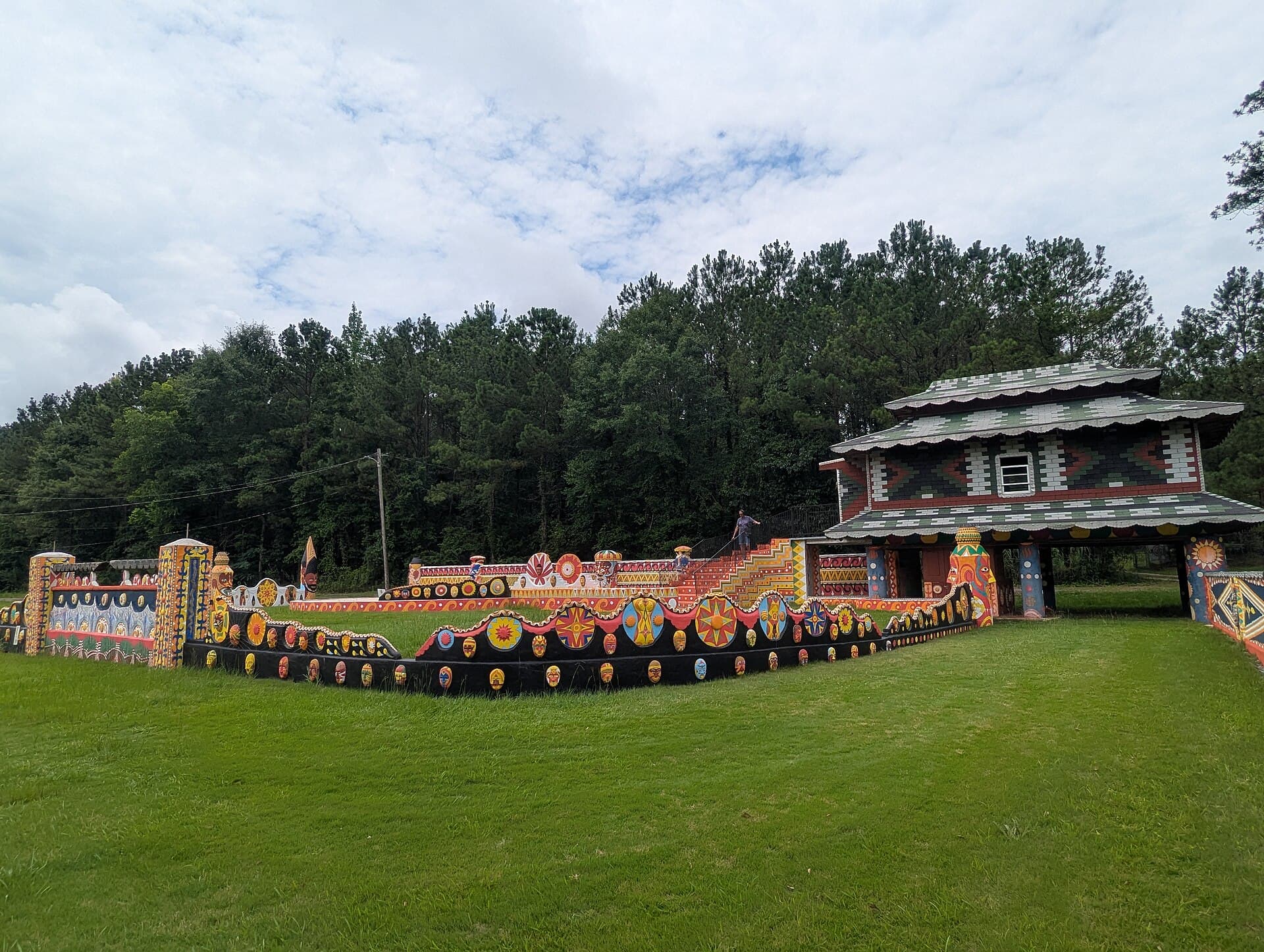
The house structure itself was originally built in the 1940s, and Martin worked around and through the existing structure, treating the original walls as a canvas rather than rebuilding to suit his aesthetic. The result is a place where the architecture and the art are inseparable. A visitor walks through rooms where the ceiling, walls, and floor all participate in the same visual language. The painted surfaces hold up to close inspection. The layers of paint reveal the accumulation of years, and the scale of the work is surprising. The entire site is essentially one continuous artwork, and the seven acres are manageable for a two-to-three-hour visit.
The approach road, the front lawn, and the side yards each have distinct character. Freestanding sculptural forms are placed along paths and sightlines that reward a slow pace. The grounds feel assembled intuitively rather than planned on a grid, and parts of the environment have that quality. There is no rigid layout, no numbered placards telling you exactly what to think about each element. The site asks you to read the material carefully and let the work speak for itself.
Pasaquan's reputation has grown significantly since the 2000s, when renewed community attention and university stewardship elevated it from a well-kept local secret to a recognized destination in the American folk art landscape. The site has been featured in national publications and has attracted visitors from across the country. Martin's vision was singular: a complete environment, built by hand, where every surface participates in the artistic statement.
The site sits on roughly seven acres in Buena Vista, Georgia, a small town in Harris County roughly halfway between Columbus and Albany along US-280. The Columbus State University connection matters for both the visiting logistics and the cultural significance. The address is 238 Eddie Martin Road, Buena Vista, GA 31803. The suggested contribution structure is listed by the operator: adults $10, seniors $5, students $3, and these terms are worth rechecking before a long drive. Hours are Friday through Sunday, 10 a.m. to 5 p.m., with full closures in July and December, along with federal holidays and bank holidays. This guide is desk research, not a first-person visit. Confirm the day's status with the operator before making a long drive, especially around listed closure months and holidays.
For those who appreciate handmade environments and are willing to move at a reasonable pace, Pasaquan is worth the drive. It is not a place to rush past. It rewards patience, close attention, and a willingness to let the environment speak for itself. The appointment-based access model works well, giving you time to move through the environment at your own pace without the pressure of a group or a fixed schedule. Dedicated visitors with a strong interest in folk art and environmental sculpture can easily spend half a day or more, and most visitors find themselves drawn back to specific rooms and details before leaving. The place is not designed for speed. It is designed for attention.
Mara Voss — Outsider art, visionary environments, places built by hand with no reason except someone made them.
Research Note: confirm hours and access with the operator before a long drive.
Highlights
Walls That Do the Talking
Seven acres of painted walls, patterned figures, and symbols—St. EOM’s complete visual language, best read slowly.
Built for Slow Looking
Sightlines keep changing as you move. Give the site time instead of treating it as a roadside photo stop.
Plan around the Calendar
Official hours are Friday–Sunday, 10am–5pm, with full closures in July and December. Verify before a long drive.
A Real Detour
Outside Buena Vista, Georgia—far enough from the usual routes that the approach is part of the experience.