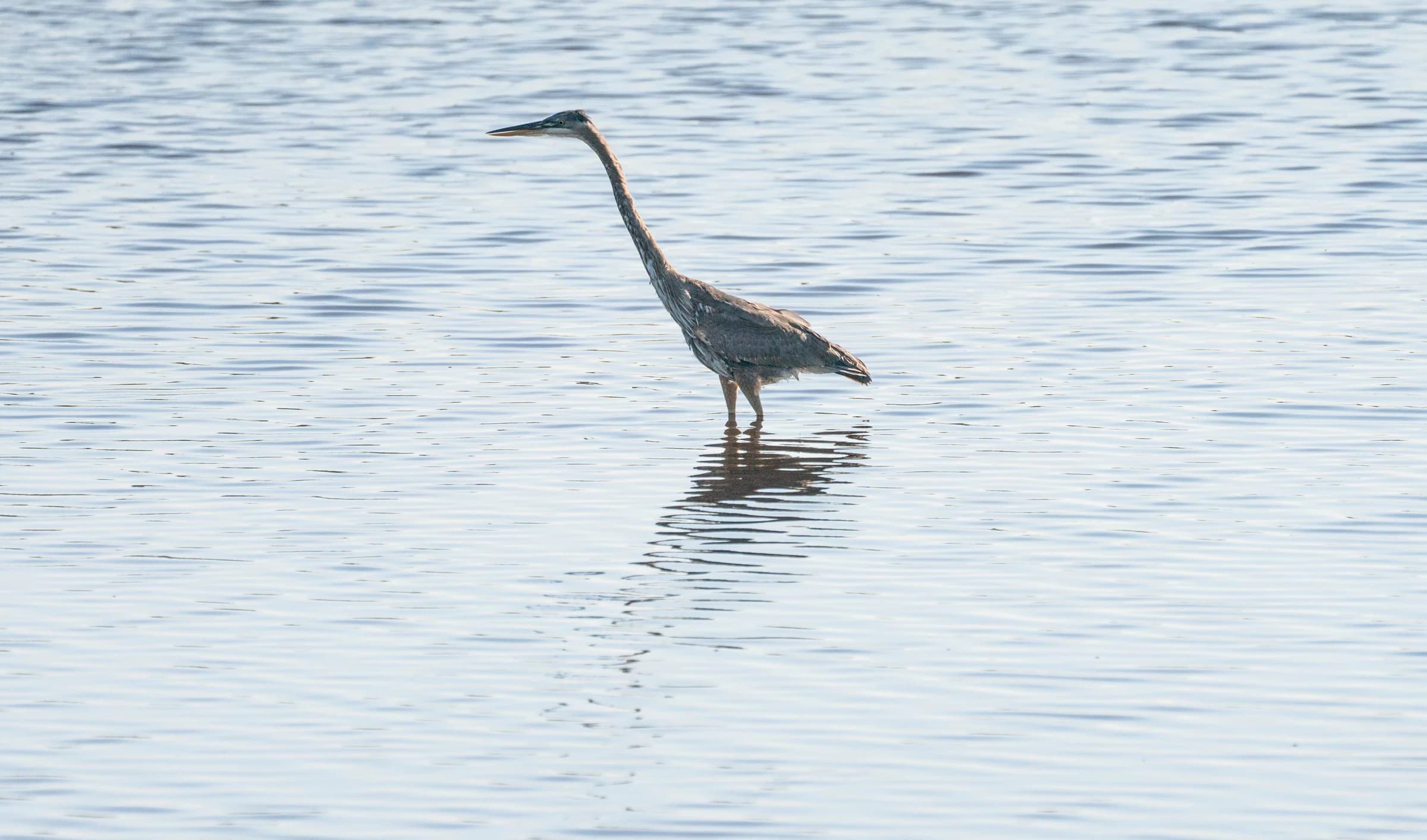
Bombay Hook National Wildlife Refuge’s wildlife drive is closed after significant damage from the Thanksgiving storm. at the November 28, 2026 source check, the U.S. Fish and Wildlife Service gave no timeframe for reopening. treat this as a guide for planning ahead, not an invitation to drive the route now. check the refuge’s current announcement before setting out, and do not interpret ordinary opening hours or a purchased entrance pass as permission to pass a closure.
when access is confirmed, the reason to choose Bombay Hook is the variety of wetland habitats along Delaware Bay. tidal salt marsh makes up much of the refuge: cordgrass meadows, mud flats, tidal pools, creeks and streams. freshwater impoundments, forests, forested wetlands and open meadows add different settings. this is not one interchangeable stretch of water. a useful future visit can be organized around comparing those habitats, rather than racing between stops to collect a promised list of birds. no photograph or species list can establish what will be present on your travel day.
the refuge was established in 1937. both the FWS history page and an independent Delaware DNREC scientific paper record that founding year. its conservation setting is the useful background to a birdwatching trip, but a long history does not settle today’s access. avoid turning a normal route description into a post-storm itinerary: the wildlife-watching page describes the refuge’s facilities, while the current closure announcement controls whether the drive can be used.
the Boardwalk Trail illustrates that distinction. FWS describes it as wheelchair accessible and as a trail through tidal salt marsh. it could be a useful feature to ask about when planning a later visit, but that ordinary description does not confirm its condition or approach after the storm. the published drive closure is not an invitation to walk or cycle around barriers. ask the refuge which public areas, if any, are currently accessible, and whether the route you need is usable for your group. do not assume a walking trail is an available substitute for the closed drive.
quiet observation is part of the preparation, not just a matter of manners once a bird appears. refuge rules prohibit feeding wildlife and using mechanical or electronic devices to lure or attract it. playback is not a way to improve the odds of a photograph here. drones are also prohibited. plan to look patiently and leave animals undisturbed rather than trying to manufacture an encounter. use designated trails only when access is confirmed, and take your rubbish away: the refuge is carry-in, carry-out.
the main facility address is 2591 Whitehall Neck Road, Smyrna, de 19977-2912. the official contact number is 302-653-9345. use those details to verify access, not as a promise that the visitor center is open during storm recovery. ordinary outdoor hours run from half an hour before sunrise to half an hour after sunset; those hours do not override the drive closure. indoor staffing and weekend availability are separate checks, so confirm a visitor-center stop before relying on it.
also check hunt notices independently of the storm announcement. the posted 2026 HQ hunt schedule includes December 16, when all roads and trails close and the visitor center remains accessible. that exception describes the hunt arrangement, not a blanket assurance about access during storm damage. the two notices answer different questions, and neither should be used to cancel out the other.
ordinary posted entrance fees are $4 for a personal vehicle or $2 for a pedestrian or cyclist. buying a pass does not reopen a closed route; settle the access question before making a special trip or planning around a particular trail. for a future warm-weather visit, add insect protection and suitable clothing to the preparation: FWS warns that mosquitoes, ticks and biting flies can be very numerous from june through september. that is seasonal advice, not a forecast for a winter day. the decision for now is simpler: wait for an actual operator access update, not an assumed reopening date.
Research Note: confirm hours and access with the operator before a long drive.
Highlights
tidal marsh and impoundments
different wetland habitats give a future visit its focus; the current drive closure takes precedence over ordinary route descriptions.
check the actual access notice
no reopening timeframe is stated. confirm any visitor-center or trail access separately; the december16,2026 hunt notice is a different closure.
quiet wildlife observation
FWS prohibits wildlife lures, feeding and drones; plan patient observation without promised birds or numbers.