

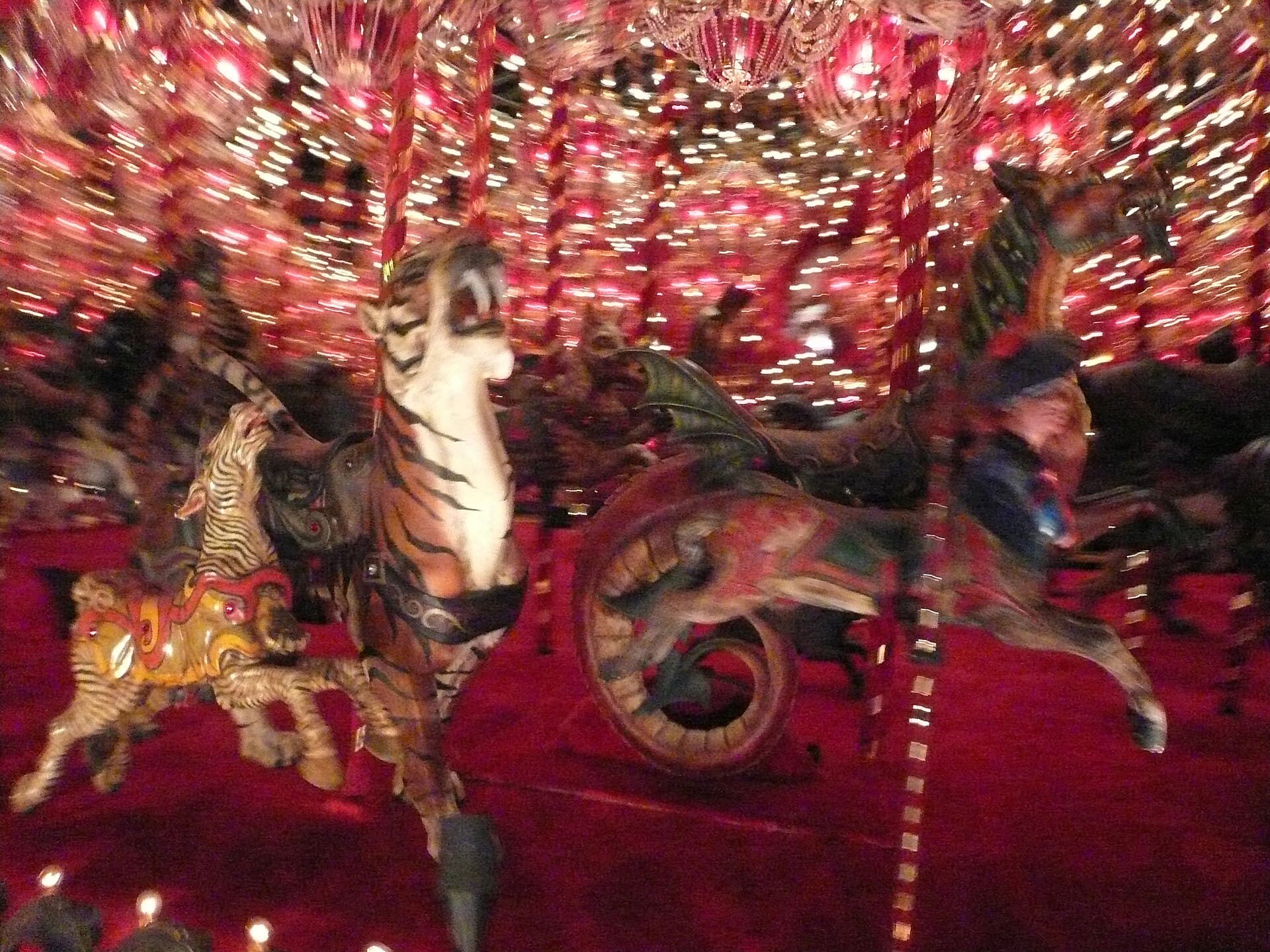
The House on the Rock sits on a limestone bluff above the Rock River in Cedar Grove, Wisconsin, about an hour and a half west of Milwaukee and roughly fifty miles southwest of Chicago. It is, in the truest sense, a house that grew the way no house was ever meant to grow. Alex Turner bought the property in 1947 and began renovating it as a family home; what started as a single fixer-up on a quiet stretch of river valley slowly became a sprawling, multi-building complex of more than 160,000 square feet that today holds somewhere between 15,000 and 20,000 objects — a number the site itself has never quite nailed down, because the collection has a habit of growing faster than the inventory can count. The result is one of the Midwest's most singular buildings, and one of the clearest examples of a private obsession allowed to run all the way to completion.
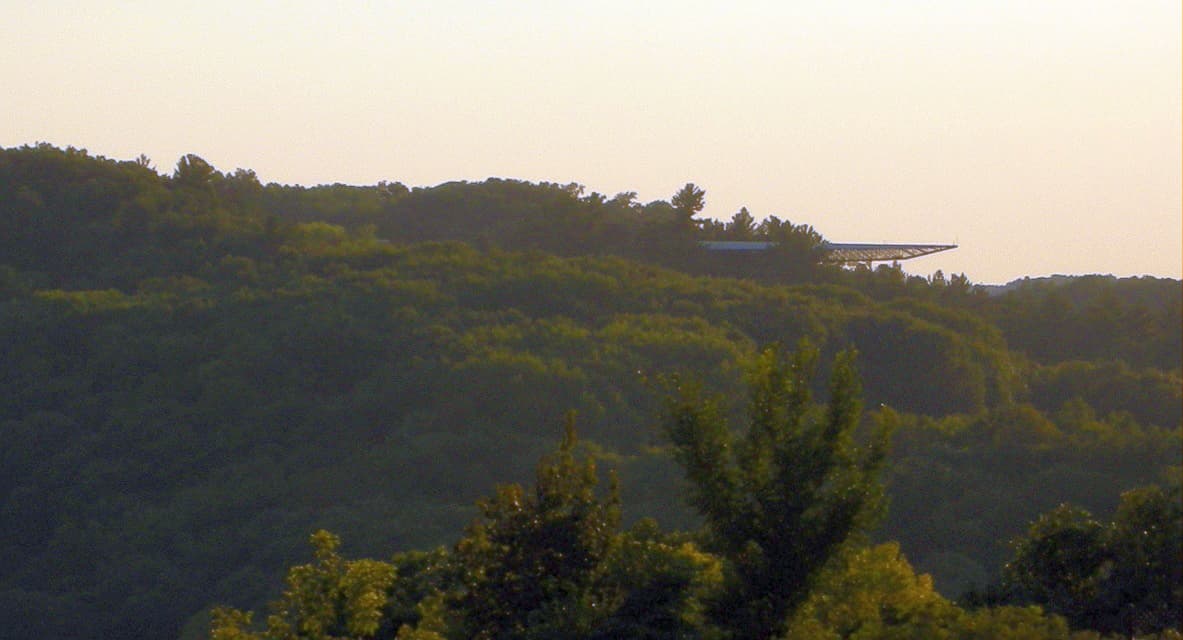
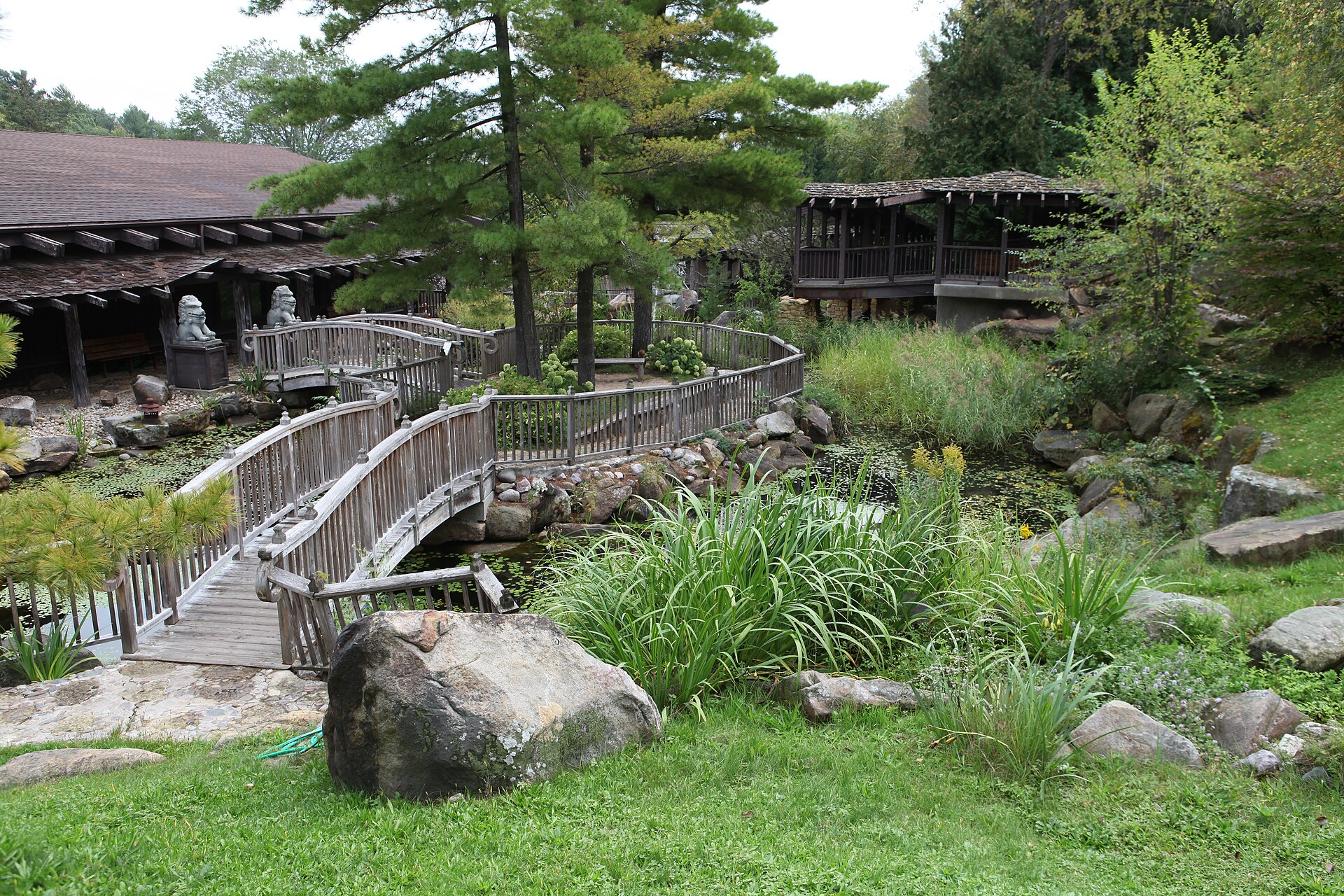
The part of the property you will photograph first is the glass wing. It is a long, low, fully glazed structure that projects out over the edge of the bluff, holding its weight on a cantilever of roughly 150 feet so that the floor of the building appears to float above the trees and the river far below. Inside that wing Turner staged some of the collection's more theatrical rooms — furniture, sculpture, and curiosities arranged so that visitors looked out from under glass onto the valley. The effect is architectural and a little theatrical: a vast pane of glass separating a densely packed interior from an open landscape, with the building's footprint extending out over the drop in a way that still reads as daring. When Turner died in 2004, this wing was already the most recognized image in the complex, and it remains the one most people mean when they say they want to see the Glass House.
The rest of the complex works less like a single building and more like a series of rooms that kept being added. Because Turner acquired objects continuously — a crate of antiques here, a run of taxidermy there, a building that had been someone else's problem — the site never settled into a fixed floor plan. Rooms were built, reconfigured, and re-purposed as the collection demanded space. A room that is a children's exhibit one season can be a storage annex the next; the official schedule notes that which spaces are open shifts with the season and with how each room is currently being used. There is no single through-line and no attempt to impose one. That instability is part of the appeal: you are never walking a clean, curated narrative, you are wandering through a living, still-unsorted hoard that has its own logic and its own dead ends.
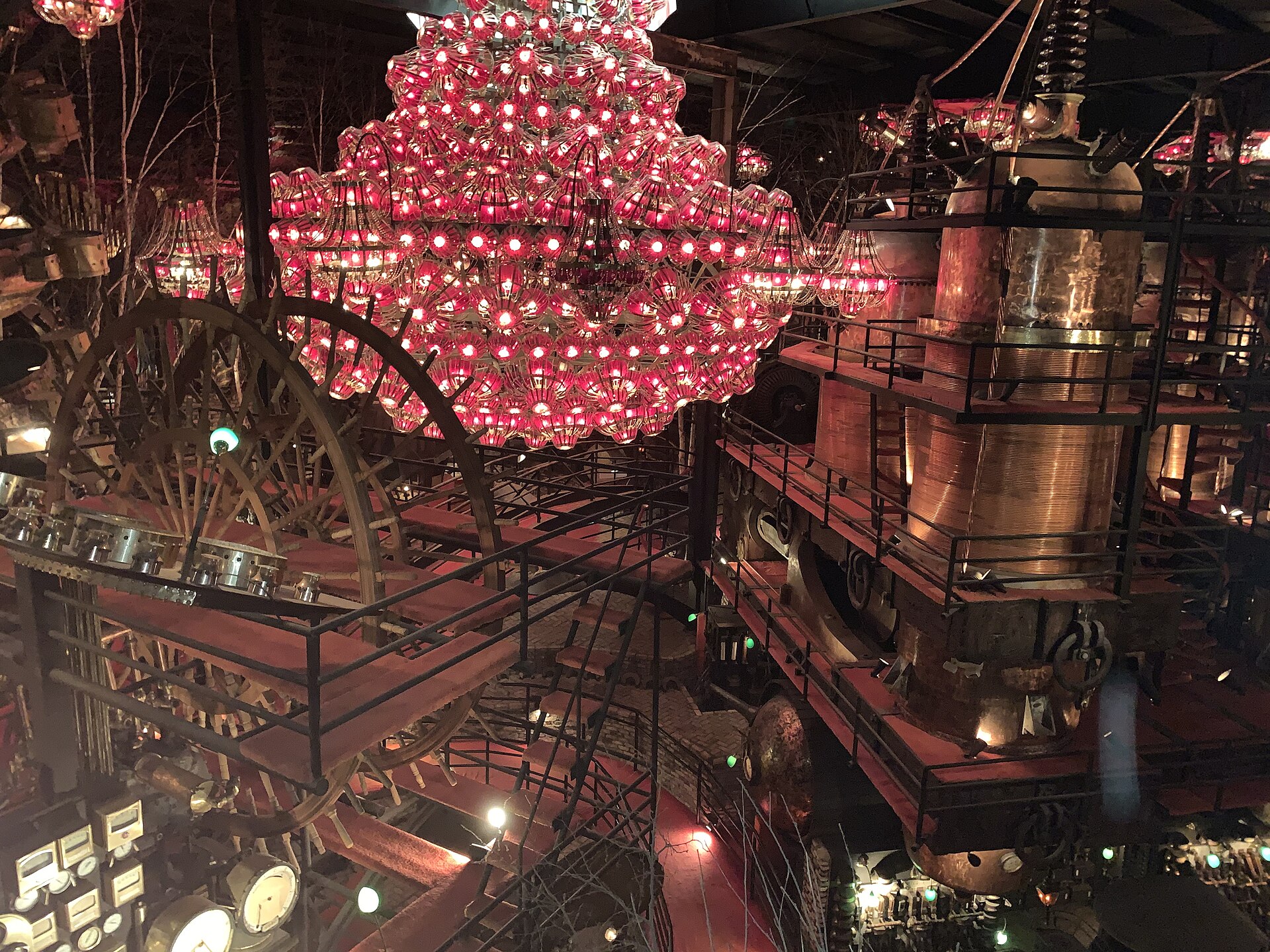
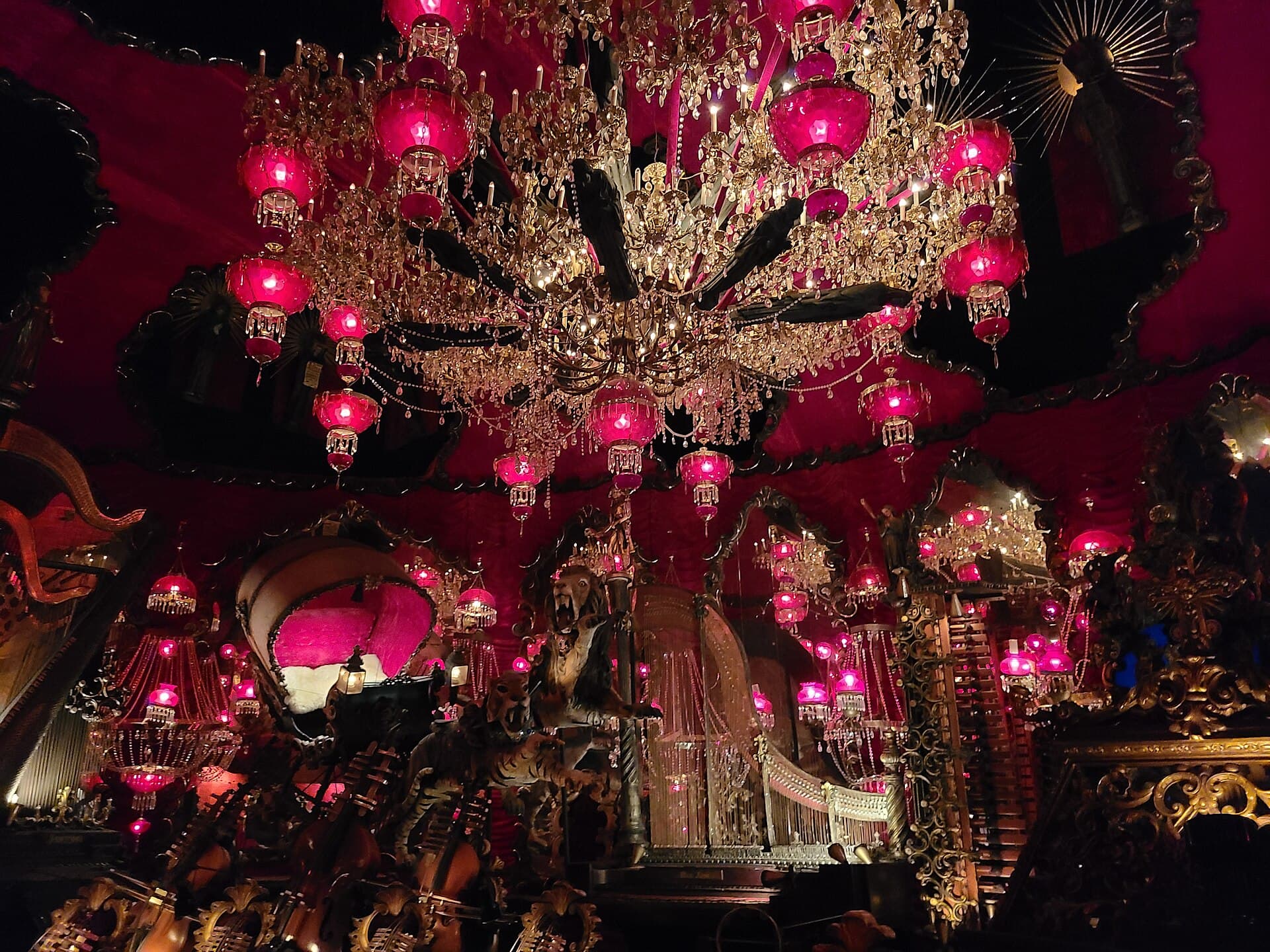
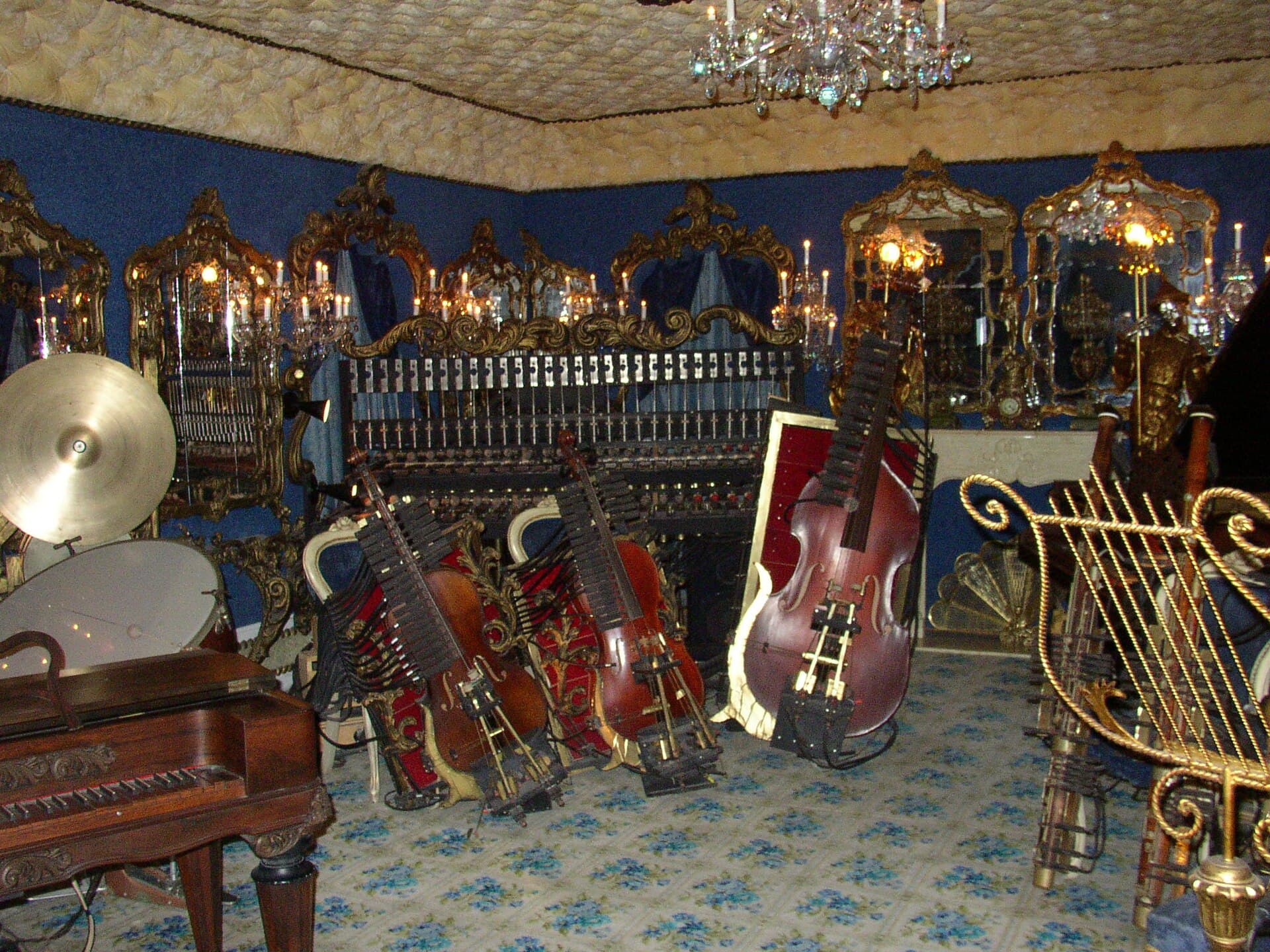
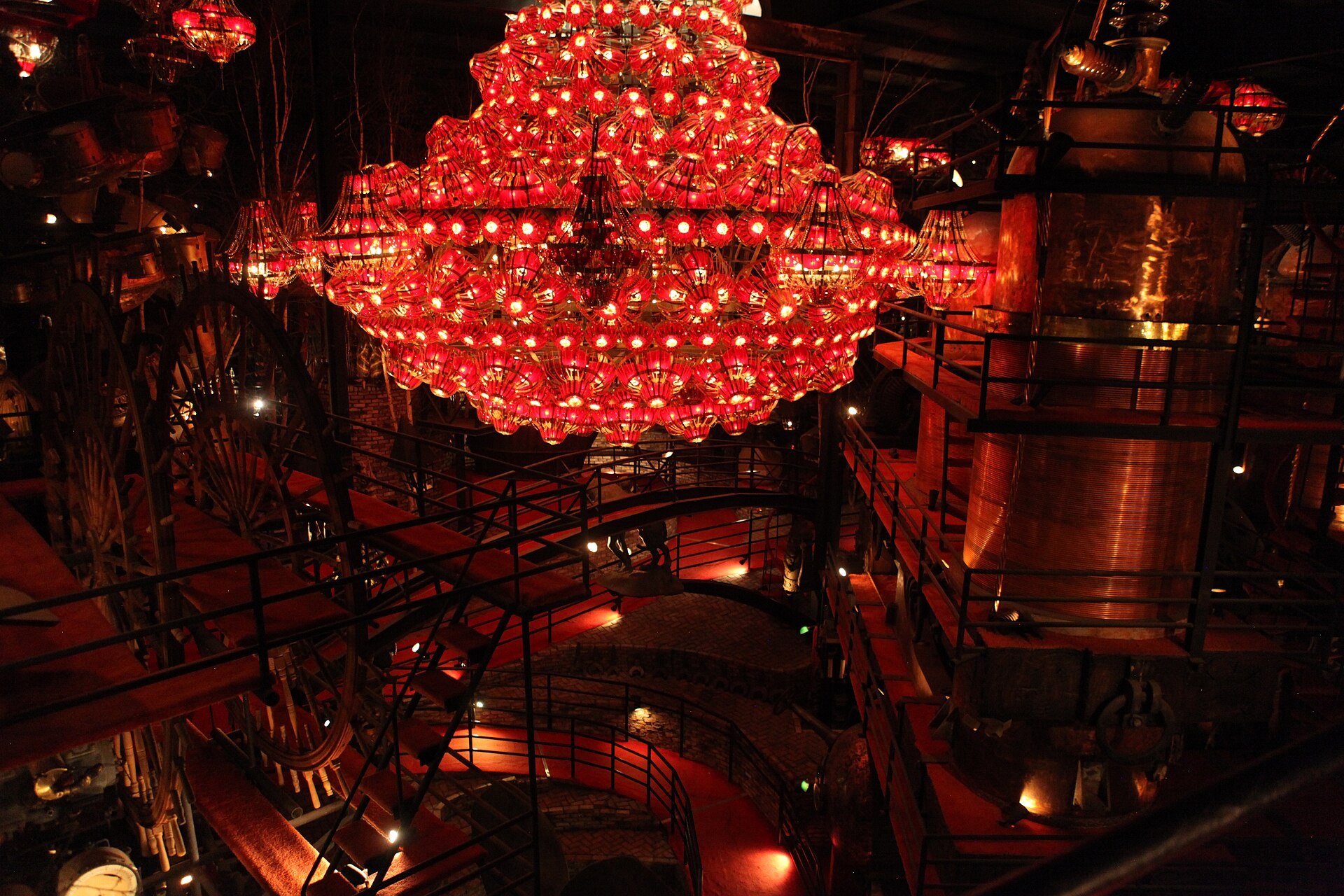
A few of those rooms have become almost as famous as the architecture. The Organ Room is the best known: a chamber hung with chandeliers — at its peak more than fifty of them, salvaged from old ballrooms and hotels — that light the room in a warm, almost churchlike glow while the objects on the shelves below take on the look of a private museum of the decorative arts. Standing in it, you are looking up at a ceiling of salvaged light fixtures and down at a dense field of antiques, and the room functions exactly as Turner intended it to, as a small cathedral of the decorative. Elsewhere the complex holds a dedicated Wild Birds building filled with pinned and taxidermied North American specimens, a large and serious collection of antiques and folk art, a car and Americana space, and a working carillon. A bookstore and a gift shop complete the commercial loop around the odder rooms, and none of it was designed as a museum in the conventional sense; it accumulated the way a very serious collector's garage does, except at the scale of a hillside.
The practicalities are straightforward. The address is 5750 State Highway 26 in Cedar Grove, and you reach the buildings from the parking area at the base of the bluff by a staircase or an elevator. The site runs on a seasonal schedule — open daily through the warmer months, with reduced hours through the winter — so it is worth checking the current hours before you drive up, and admission is modest, on the order of eighteen dollars for adults, with lower rates for children and group pricing available. There is no official tour and no required route; visitors are free to move through whatever rooms are open. Because the collection is so large and so unevenly distributed, most visitors find it worth an afternoon rather than an hour. A first walk-through will almost never cover everything, and that is precisely the point: the building rewards a second visit the way a library does, where you finally find the shelf you passed the first time.
What the visit actually feels like is closer to browsing a very large, very strange estate sale than to sitting through a museum lecture. The scale is the thing that gets to people: rooms on top of rooms, each one dense with objects, each one a different period, taste, and material. There is no single masterpiece here in the way there is at a fine-art museum; the collection's value is in its sheer breadth and in the fact that a single individual spent a lifetime gathering all of it and refusing to let go. For visitors with young children it is an adventure; for collectors and the quietly obsessed it is a pilgrimage; and for the rest of us it is a reminder that the most memorable buildings are often the ones built by people who were never planning to stop.
It is not a place for everyone who wants a clean, white-wall experience, and it has changed hands since Turner's death, with parts of the complex put to commercial use and the whole operation now run by a steward rather than its creator. But as a piece of American eccentricity — a single family's house grown, room by room and decade by decade, into a hillside museum with no end in sight — it remains one of the most singular buildings in the Midwest. The reason it still pulls visitors out of the way is that it genuinely is what it claims to be: a house, and then, somehow, a lot more.
Mara Voss — Outsider art, visionary environments, places built by hand with no reason except someone made them.
Research Note: confirm hours and access with the operator before a long drive.
Highlights
Cantilevered Glass House
A 150-foot glass wing that reaches out over the bluff and the Rock River.
15,000+ Objects
Turner's collections of antiques, folk art, and decorative objects.
Wild Birds
Pinned and taxidermied North American bird specimens in a dedicated building.
Runnymede
A car and Americana collection in a separate building, the complex’s other signature attraction.